Coalition publishes landmark blueprint for Only Rainwater into Windermere
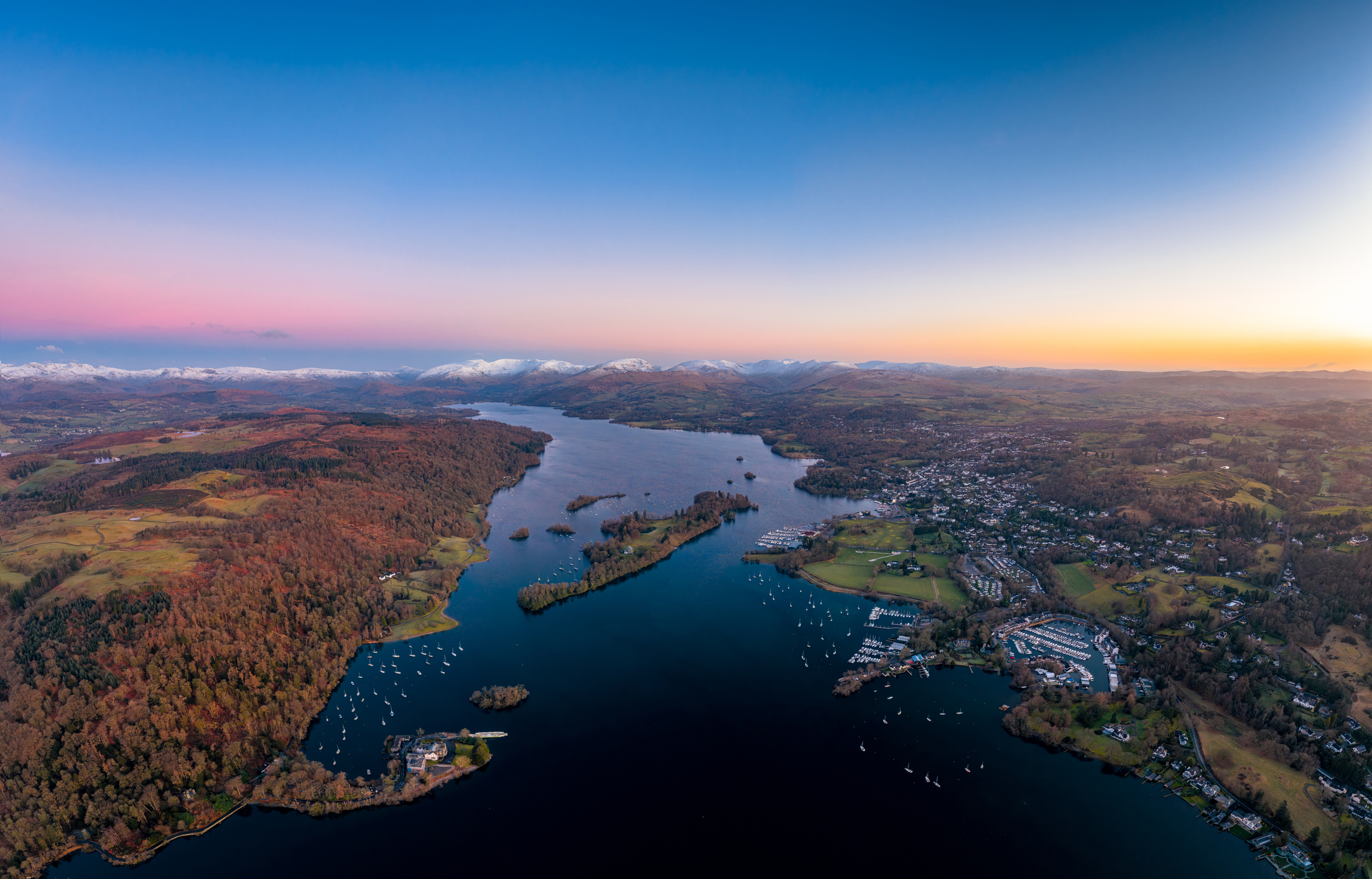
A coalition of national and local organisations has today published a landmark feasibility report setting out how England's largest natural lake could be protected for the next 100 years through one of the most ambitious freshwater restoration programmes ever proposed in the UK.
The Only Rainwater into Windermere feasibility study concludes that it is technically possible to remove wastewater inputs and highway runoff from Windermere and create a future where only rainwater enters the lake.
Developed over the past 15 months by a coalition of regulators, local authorities, community stakeholders, environmental campaigners and the regional water company, the study explores how a catchment-wide solution could address the growing environmental and climate challenges facing Windermere.
At the heart of a UNESCO World Heritage Site, Windermere supports internationally important habitats and species and underpins a Lake District visitor economy worth £2.4 billion per year.
The report concludes that a transformational approach is needed to create a resilient wastewater system for a changing climate. Evidence shows that Windermere is already experiencing ecological pressures such as increasing algal biomass, nutrient enrichment and impacts on sensitive freshwater habitats and species. Rising temperatures will increase these pressures while more intense rainfall places more stress on wastewater infrastructure. While significant investment is already underway, modelling indicates that continued cycles of incremental investment will not restore Windermere's ecological health or provide the resilience needed for the century ahead.
The study assessed more than 70 potential solutions before narrowing these to two preferred ways forward. Both would intercept and transfer wastewater away from the lake for advanced treatment, with up to 138km of new sewerage network, 35km of highway runoff interception, and 37 hectares of sustainable drainage. In total, wastewater infrastructure could increase by up to 75% across the catchment, and around 12,800 people could be connected to public sewers for the first time.
Both options include a new tunnel to transfer wastewater to state-of-the-art treatment facilities capable of delivering some of the highest treatment standards in England, ensuring that communities and ecosystems downstream of the lake also benefit.
The feasibility study estimates that the preferred solutions would require investment of between £3.6 billion and £3.7 billion and generate around £7.5 billion in economic, environmental, and social benefits, equivalent to approximately £1.90 of value for every £1 invested.
If the Only Rainwater solution was not built, it is estimated that approximately £2.5 billion of incremental investment would be required in existing infrastructure across the catchment over the next century to address growing environmental pressures. However, in this scenario, treated wastewater would continue to be discharged into the lake, adding to the nutrient load which contributes to harmful algal blooms, and exposing sewers and treatment works to more extreme climate-related flooding.
The report also highlights the wider benefits of the Only Rainwater approach. Alongside improving water quality in Windermere, the solution would benefit connected water bodies including Grasmere, Rydal Water, Elterwater, Esthwaite Water and Blelham Tarn. It would support employment and training across Cumbria, including proposals for a skills academy to ensure that local people benefit from job opportunities during the construction phase and beyond.
The feasibility study identifies a clear pathway to delivery, with an expected seven-year construction programme following detailed design, planning, environmental assessment and regulatory approvals. A key feature of the proposals is the use of extensive underground tunnelling to minimise disruption for local communities, businesses, and the landscape.
The Only Rainwater into Windermere coalition comprises the Environment Agency, Lake District National Park Authority, Love Windermere, Save Windermere, United Utilities and Westmorland and Furness Council.
The coalition is now calling for continued collaboration between Government, regulators, delivery partners, and local stakeholders to consider the findings and explore the next stage of development, including detailed design, planning, environmental assessment and funding arrangements. The coalition remains committed to continued engagement with local communities as the project develops.
Edward Twiddy, Independent Convener of the Coalition, said: "Only Rainwater into Windermere is an exceptional vision for an exceptional place. Every year seven million people come to Windermere to sail, canoe, swim, paddle, fish or simply to enjoy its beauty. The natural and cultural history of this UNESCO World Heritage Site make it the jewel of the Lake District National Park, and its national and international significance is reflected in the lake's importance to the regional economy.
"Set between the defensive heights of the fells and mountains, it would be easy to imagine that Windermere is one of the most resilient landscapes in the UK. But the people who know it best understand that the lake is more sensitive than meets the eye.
"Around the lake, thousands of homes, cottages, campsites and hotels remain unconnected to the main sewer network. The network itself has one of the highest levels of combined sewers anywhere in the country, with wastewater sharing the same pipes as surface runoff in a catchment that receives 2.5 metres of rainfall annually. Flat land is scarce, meaning pumping stations and wastewater treatment works are often located beside the lake or rivers that are becoming increasingly vulnerable to flooding.
"Our Only Rainwater into Windermere coalition has looked beyond the constraints of traditional five-year investment cycles and, after assessing more than 70 options, has identified a transformational solution that would improve resilience, adapt to a changing climate, protect this globally important environment and support sustainable growth in the Lake District economy.
"Rather than spending £2.5 billion on incremental interventions that may never fully achieve these outcomes, and that would bring decades of disruption to communities and businesses, this report presents a £3.7 billion investment capable of delivering £7.5 billion of benefits.
"This is ambitious. It is different. But Windermere is unique, and if we are serious about protecting it for generations to come, we need to be prepared to think bigger and act bolder."
Louise Beardmore, Chief Executive Officer of United Utilities, said: "What makes this work so extraordinary is the unprecedented coalition behind it. Environmental campaigners, local authorities, regulators, community groups, and United Utilities have come together with a shared ambition: to secure the future of Windermere for generations to come.
“This landmark feasibility study is clear. Rising temperatures, population growth and increased rainfall demand a transformational approach to create a resilient wastewater system for the future. After assessing more than 70 options, two have been selected to progress into detailed design, with the potential to deliver lasting environmental, social, and economic benefits across the catchment.
“This is about far more than infrastructure. It's a chance to protect and restore one of the nation's greatest natural treasures through ambition, innovation and partnership. The coalition has set out a clear path forward, and we're ready to work with government, regulators, delivery partners, and local communities to take the next steps on that journey.
“Windermere is treasured by millions and is central to the lives and livelihoods of local communities. It deserves solutions that match its importance. We have an opportunity to be bold, think beyond the next investment cycle, and create a cleaner, healthier, more resilient future for this remarkable lake. That ambition isn't just possible. It's essential."
Matt Staniek, Founder of Save Windermere, said: “Save Windermere has been calling for an end to sewage pollution in Windermere for five years. It is the principal driver of the environmental problems facing our lake, and eliminating it is essential to protect Windermere for future generations.
“The evidence from the report is clear: eliminating sewage pollution will tackle the most significant controllable cause of the problems we are seeing today, create the conditions for ecological recovery, strengthen the lake’s resilience to climate change and boost the local economy.”
Carol Holt, Environment Agency Area Director for Cumbria and Lancashire, said: "The Lake District is a source of great national pride, with Windermere at its heart, attracting millions of visitors every year and providing a home to internationally important wildlife that depends on clean, healthy water to survive.
"But evidence shows our waters face growing pressures, including from sewage pollution which an ever-changing climate will only intensify. We must do more to protect them.
"We welcome this ambition from United Utilities to design an innovative solution for freshwater restoration and, as an environmental regulator, will continue to work closely across the partnership as the project progresses.
"This project has the potential to create opportunities for people living and working in the North West, while helping us work towards cleaner, healthier lakes for people and wildlife for generations to come."
Nigel Wilkinson, Chair of Love Windermere, said: “As Chair of Love Windermere, it has been a privilege to represent our partners the Cumbria Tourism Local Visitor Economy Partnership, Environment Agency, Lake District Foundation, Lake District National Park Authority, National Trust, NFU, South Cumbria Rivers Trust, United Utilities and Westmorland and Furness Council all working together with a shared ambition for Windermere's future.
"The vision set out in the Only Rainwater into Windermere Feasibility Report is rightly ambitious. While there is still much work to do and important decisions ahead, the progress made over the past 15 months shows what can be achieved when organisations come together behind a common goal. This report is an important milestone, but improving the health of Windermere will continue to require collaboration, evidence-led decision-making and sustained action across the whole catchment. Everyone has a role to play in protecting and restoring this special place.
"Love Windermere remains fully committed to delivering its Action Plan, taking practical steps to improve water quality now and helping people access clear, trusted information about the lake. Many of the actions already underway support the shared ambition of only rainwater into Windermere, and we look forward to working with partners, communities and stakeholders as the project moves into its next phase.”
Steve Ratcliffe, Director of Sustainable Development Strategic Change at Lake District National Park Authority, said: “The Only Rainwater into Windermere feasibility study is an important milestone in exploring how we can secure the long-term future of Windermere, one of the nation's most iconic and valued natural assets.
“The study reflects the commitment of partners across the catchment to work together to improve water quality and build resilience to the growing impacts of climate change. While this is a feasibility study rather than a final decision, it provides an important opportunity to consider what future investment could help achieve for Windermere and the communities, businesses and wildlife that depend on it. Through the Love Windermere Partnership, organisations are already working together on practical measures within our control, and that work must continue. And the ambition of the 25 organisations that look after the National Park - the Lake District National Park Partnership - goes further: that all water in the Lake District is ‘clean and plentiful for people and nature through restoring natural processes and reducing pollution’.
“Alongside exploring major infrastructure solutions, we also want to see opportunities across the wider catchment to restore natural processes, support sustainable land management and improve water quality for people and nature. Achieving lasting improvements will depend on continued partnership working and a shared commitment to securing a healthier Windermere for future generations.”
Cllr John Murray, the Westmorland and Furness Council Cabinet Member for Climate, Biodiversity and Regulatory Services, said: “The Only Rainwater into Windermere feasibility study is an important opportunity to explore how we can ensure long-term sustainability and improve water quality in one of the nation's most iconic assets.
“As a local authority one of our priorities is to see how the environment positively impacts on health, wellbeing, and the economy and to build resilience to the effects of climate change and take action to reverse biodiversity loss. Working with partners, this project presents a fantastic chance to effect real and significant positive change, to bring about a healthier lake and the surrounding area, while also balancing the needs of the community, economy and our natural assets.”