Brand image

Climate related risks

Managing climate related risks in a sustainable way is central to United Utilities’ purpose of delivering reliable water services while supporting a stronger, greener, and healthier North West.

The majority of our climate risks that we have identified are physical posing a material risk of destruction or disruption of our assets and systems. These impacts are already affecting our operations and worsening existing material issues such as sewer and asset flooding, and asset deterioration.

We are also exposed to transitional risks associated with the move to a low-carbon economy, including policy, legal, technological, market and reputational risks.

Physical risks

  • Unpredictable extreme weather conditions are becoming more common. Evidence shows that climate change has, and will continue to, worsen extreme rainfall and storm events as well as increase the likelihood of heatwaves. Impacts of storms include rainfall overwhelming sewers, landslips, assets flooding, power outages and turbidity issues in raw water sources.

  • Extended periods of lower-than-average rainfall reduce the amount of water available to use. This impact is intensified by greater demand for water, soil moisture deficits, and the loss of water to evaporation in hotter weather.

  • While we expect annual averages to remain broadly like today we can see a notable differences in the projected profile of when the rain will fall. Significant reductions in summer rainfall from current trends and an increasing in winter rainfall will increase risk of sewer flooding and also provide challenges to supplying great water.

  • The key risk of cold waves and frost is freeze and thaw. Freeze thaw cycles cause ground movement and in turn damaging buried assets and quick thaw of frozen supply pipes causes them to burst.

  • Absolute sea level rise is expected to average up to 1m by 2050. This means our coastal assets, and those on tidal waters, will  be at increased risk of flooding and outfall blocking  and the risk of asset inundation and damage will also increase.

Transitional risks

  • Movements in policy and legislation, changing practices influencing financability and investor sentiment.

    Evolving policies, regulation and legislation to address mitigation and adaptation requirements increasing operating costs, putting pressure on both company and customer affordability.

  • Rising costs of raw materials or increased price of low carbon raw materials.

  • Decarbonisation in energy supply causing the grid to be more distributed and more reliant on intermittent sources and a greater risk of disruption and service irregularities.

  • Changing customer, colleagues, and investor expectations and increasing pressure pressure to deliver climate change mitigation action.

Climate-related risks categorised by casual factor

Bar colours indicate the maximum risk score across the five country-specific assessments. Arrows show how the regional mean risk scores change between the short and the long term (adverse scenario).
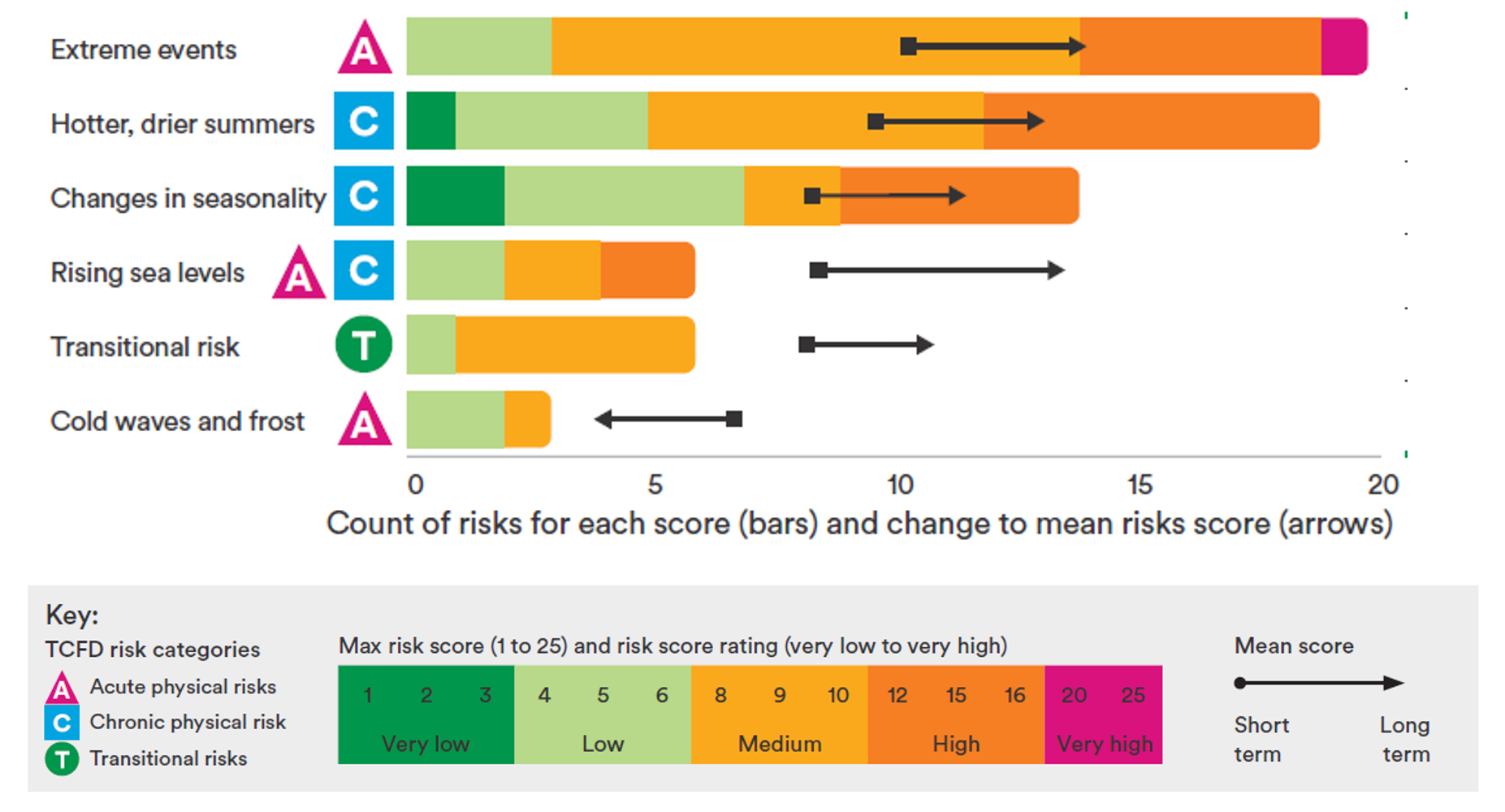
Climate-related risks categorised by casual factor