Reduce your risk of flooding
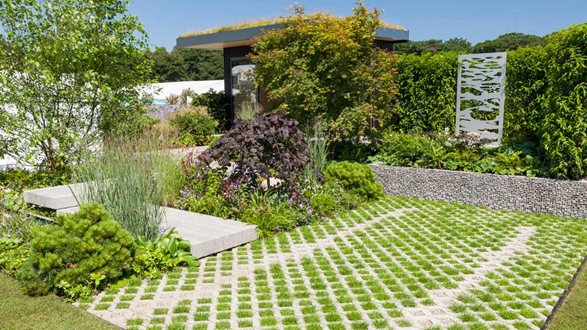 By using sustainable drainage methods at home, you can reduce the risk of surface water flooding.
Surface water flooding
Surface water is another word for rain that is collected by drains and gullies on your homes and gardens, before it goes into the sewer. Heavy rain can sometimes overwhelm drainage systems, and if not properly managed, can cause flooding of roads, gardens and even properties. Surface water can also wash away soil, and as it flows overland it can mix with other materials that pollute the local environment.
With the reduction in grassed areas over the past few decades, rainwater has nowhere to go which increases the amount of surface run-off and the speed at which it goes into to the sewer which can then cause flooding. We all like to make a difference, and one of the easiest ways is to think about how you manage your surface water.
Our ‘Slow the Flow’ garden shows you how you can use sustainable drainage at home
In July 2020, we sponsored a very special show garden at RHS Tatton Flower Show created by garden designer John Everiss. Our Slow the Flow garden was designed to demonstrate ways to capture rainwater and slowly release it into the sewer system to reduce potential flooding problems.
Key areas of the garden:
|
|
|
|
|
|
|
|
|
|
|
|
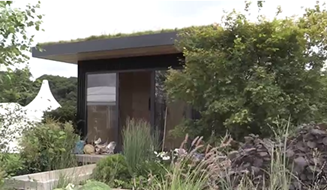 Living roof with solar panel -a low maintenance grass roof which acts as a sponge during heavy rain allowing water to drain away slowly.
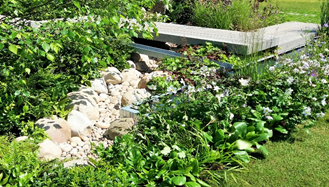 Stone catchment gully –
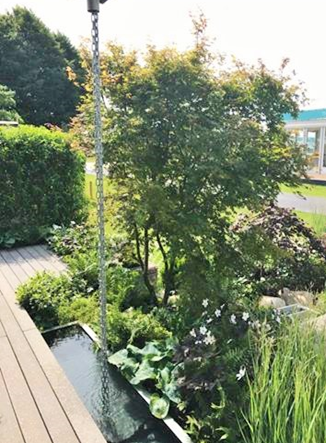 Downfall pipe/chain -
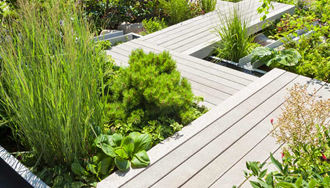 Concrete beam walkway
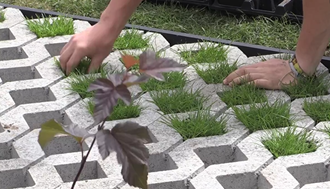 Turfstone driveway
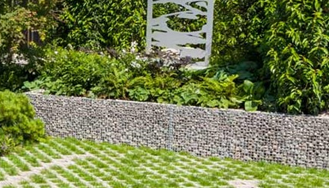 Gabion walling
You can also consider…
Rain garden
A rain garden can be a natural or artificial dip in the garden that is filled with soil and plants. Surface water is channelled to the rain garden where it can be absorbed by the plants or drains into the ground.
Water butts
Water butts collect rainwater and store it for reuse, and with the average UK roof collecting 90,000 litres of water per year, this is more than enough to keep your water butt topped up. This stored water can be reused for watering your garden and washing cars. You can buy a water butt here.
Get water fit!
You can also help prevent flooding by reducing the amount of water that goes into our sewage pipes. Click the button below to find advice on how to save water and money.
Watch our videos on how we're reducing surface water drainage:
Greening the gray
We’ve been working on how we can help transform ‘grey areas’ across the NW into greener spaces to help reduce surface water flooding.
Blue Green Roof
We collaborated with Bruntwood office space, Block & Polypipe to build a Blue Green Roof in Manchester to reduce surface water entering our network. Watch the video to find out more.