Water quality starts at the top of the hill
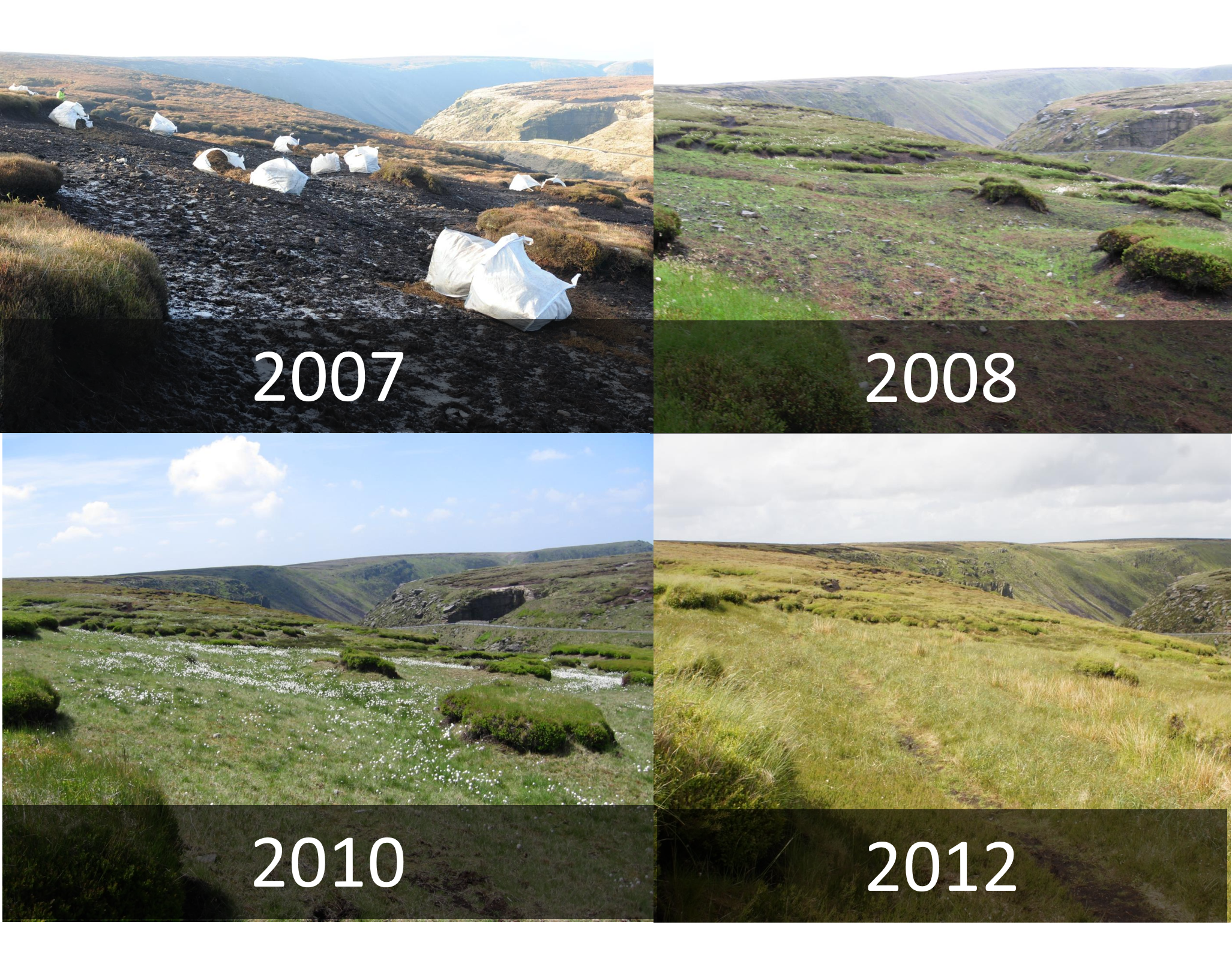
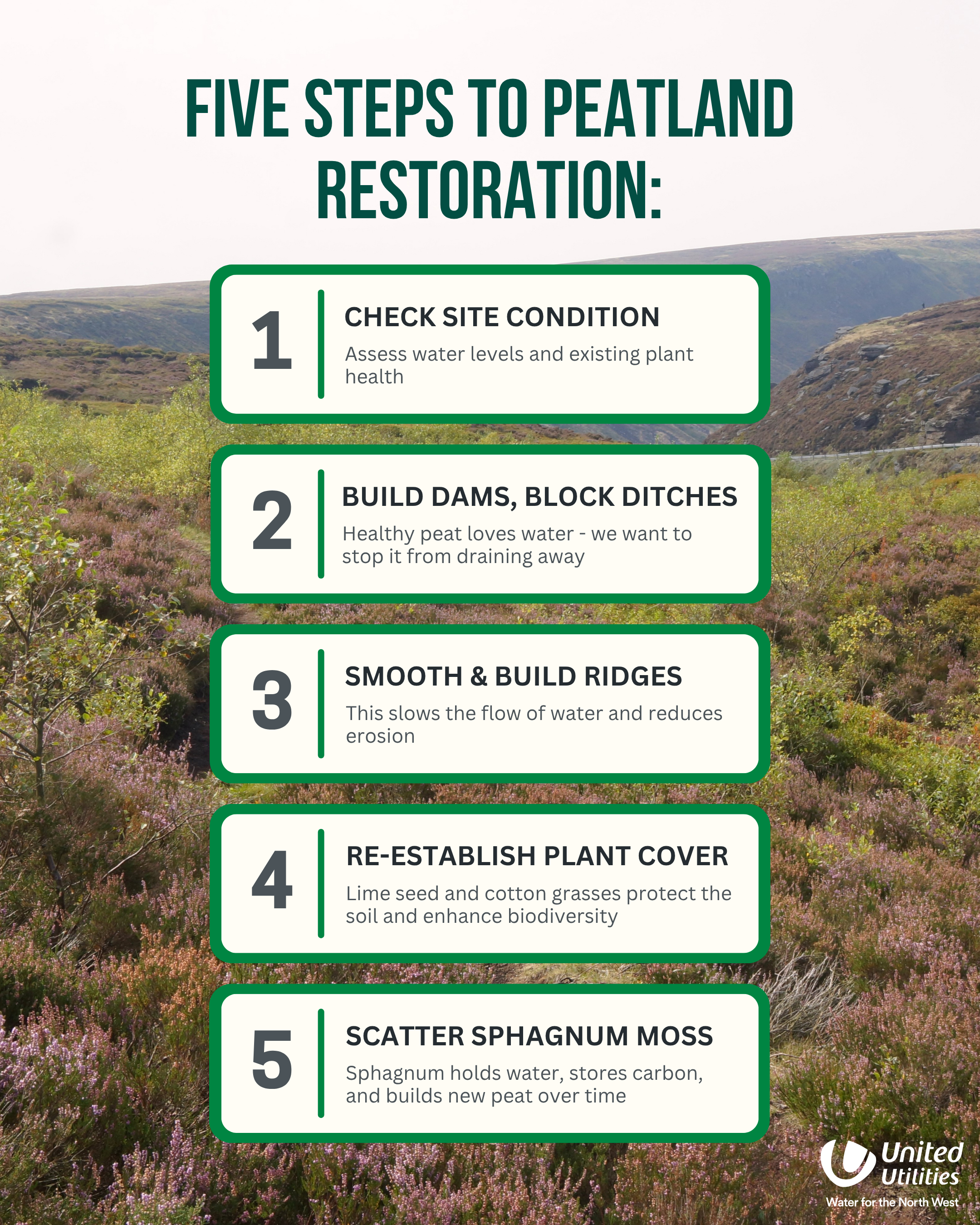 We’ve been restoring peatland on our moorlands for more than 20 years.
Before the rain arrives in Manchester, our catchment teams are protecting the land it falls on. Eroded peatland can cause a muddy colour which affects raw water quality, so preserving it means we can help water to be in the best condition when it arrives at our treatment works.
Healthy, moist peatland also locks in carbon to reduce emissions, encourages biodiversity, and reduces the risk of wildfires. It supports the growth of plants and vegetation, which then helps to protect the land further.
Importantly for us, healthy peatland acts as a natural water filter – removing sediment and absorbing nutrients as it flows through the land.
To restore moorland, we work closely with local partner organisations who also care about it, such as RSPB Dovestone and Moors for the Future.
Over the last season in Greater Manchester, we’ve restored an area of peatland larger than 735 football pitches - and we’re not stopping there!
|
Ed, Catchment Partnership Officer at United Utilities: “Peatland and sphagnum moss have been growing on the Manchester hills for at least 8,000 years, but around 1,000 years ago, it began to erode. “Raw water quality is my focus, so this means restoring the areas of land needing the most attention first. Restoration is a long-term job – and as United Utilities’ longest-serving peatland expert, I’ve been doing this now for more than 20 years! |